
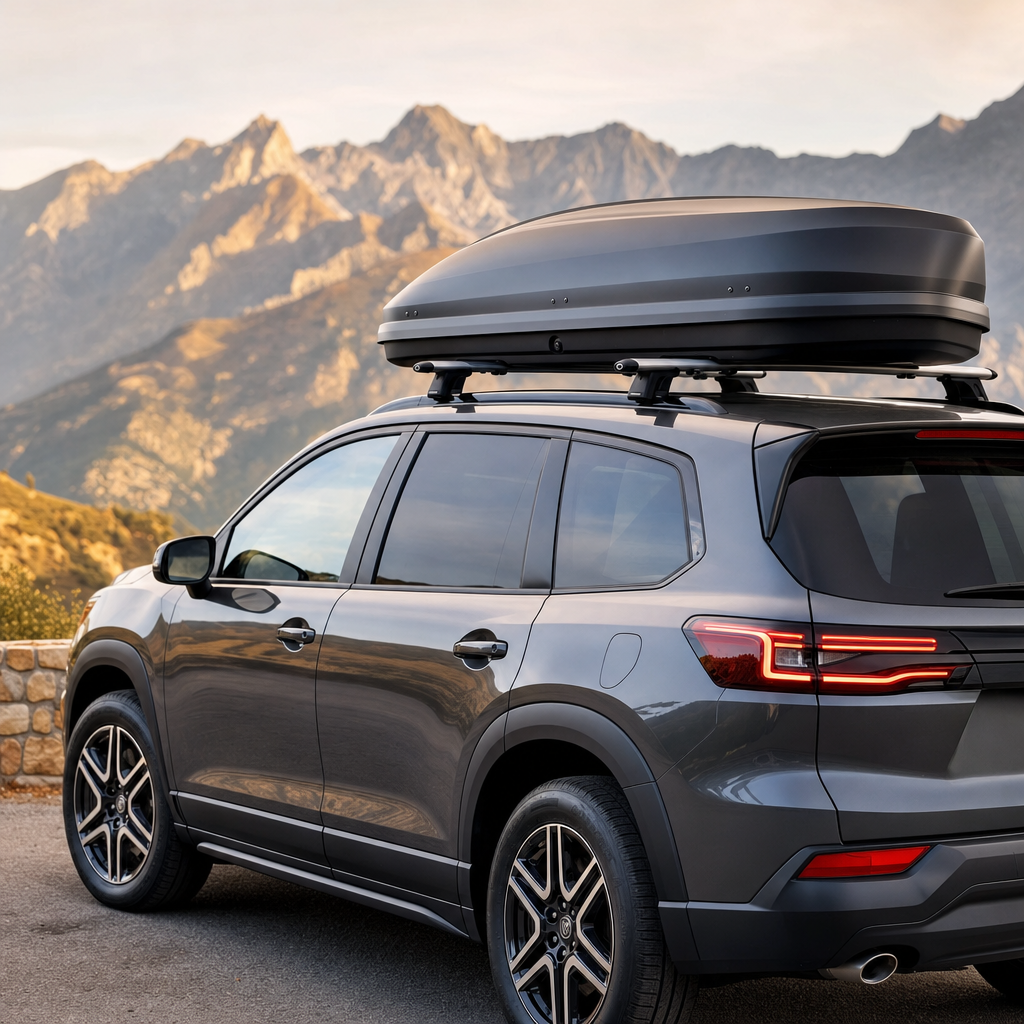
Understanding Roof Cargo Boxes and Vehicle Storage
When planning a family road trip or an outdoor adventure, the interior of your vehicle can quickly fill up with luggage, camping gear, and sports equipment. A rooftop cargo box serves as an exterior extension of your trunk, allowing you to free up valuable legroom inside the cabin and improve overall passenger comfort. These aerodynamic containers mount directly onto existing crossbars on your vehicle roof, keeping your belongings secure and protected from the elements while you travel at highway speeds.
Manufacturers design these storage containers to accommodate various types of cargo, ranging from bulky sleeping bags and suitcases to long items like skis and snowboards. By moving dense or bulky items to the roof, you also help maintain a safer vehicle interior where loose objects will not become hazardous projectiles during sudden stops. Modern options feature sleek lines and durable materials that minimize wind resistance, ensuring that convenience does not come at the absolute expense of your vehicle structural integrity or everyday usability.
Key Factors to Consider When Evaluating Options
Choosing the right rooftop carrier requires a careful assessment of your specific vehicle dimensions and your typical packing habits. You must first verify your vehicle roof weight capacity, which dictates the maximum combined weight of the carrier itself and the gear you pack inside it. Exceeding these manufacturer limits can compromise your handling and braking performance, making it essential to weigh your items before loading them onto the roof of your car, SUV, or crossover vehicle.
Another critical consideration is the opening mechanism and overall accessibility of the container. Many contemporary models offer dual-side opening capabilities, which allow you to load and unload your gear from either the passenger or driver side of the vehicle. This feature proves exceptionally helpful when parked on busy roadside shoulders or in tight garage spaces where maneuvering around the vehicle is restricted. Single-side opening models still provide reliable security but require you to plan your parking orientation more carefully.
- Measure your garage clearance to ensure the vehicle fits with the box installed.
- Check crossbar compatibility, as some mounts require specific bar shapes.
- Evaluate locking mechanisms to ensure adequate theft deterrence during stops.
- Consider material durability, balancing lightweight ABS plastic against heavy-duty composites.
Sizing Capacities and Practical Storage Options
Roof cargo boxes are generally categorized by their cubic footage capacity, typically ranging from compact ten-cubic-foot models up to massive twenty-plus-cubic-foot giants. Smaller models suit compact sedans and weekend getaways for couples, whereas larger units are tailored for large families and extensive road trips requiring substantial gear hauling. Matching the box length to your vehicle roof is equally important; an overly long box might overhang your windshield or prevent your rear hatchback from opening fully.
For winter sports enthusiasts, length takes precedence over height, as the interior must accommodate long items such as snowboards, skis, and folding chairs without bending or forcing the lid closed. Conversely, campers and beachgoers often prioritize height and width to accommodate bulky coolers, tents, and irregularly shaped duffel bags. Taking inventory of your typical gear before shopping prevents you from purchasing a container that is either too restrictive for your equipment or excessively large for your daily driving needs.
Installation, Mounting Systems, and Safety Practices
Proper installation is the cornerstone of safe rooftop cargo transportation, requiring compatible crossbars and secure mounting hardware. Most modern carriers utilize tool-free quick-mount clamps that grip around your crossbars with a simple turn of a knob or dial, often featuring audible click indicators to confirm a tight fit. It is vital to consult both your vehicle manual and the carrier instructions to ensure correct positioning and weight distribution across your roof supports.
Once installed, adopting safe driving habits with a rooftop load will protect your vehicle and your cargo. Height clearance is the most common hazard; drivers frequently forget about the added vertical profile when entering parking garages, drive-thrus, or residential carports. Additionally, expect a slight decrease in fuel efficiency due to increased aerodynamic drag, and make a habit of periodically checking the mounting clamps during long road trips to ensure nothing has shifted.
Maintenance, Storage, and Off-Season Care
Taking care of your rooftop container ensures it lasts through years of seasonal adventures and unpredictable weather conditions. Regular cleaning with mild soap and water removes road grime, salt, and insect residue that can degrade plastic finishes over time. Avoid using harsh chemical solvents or abrasive scrubbers, which can scratch the exterior surface and compromise the protective UV coatings designed to prevent fading and material breakdown.
When the travel season ends, storing the unit properly prevents warping and structural damage. If you remove the box from your vehicle, store it flat in a garage or shed, ideally supported off the ground or suspended securely from the ceiling using a specialized hoist system. Inspect all latches, hinges, and weatherstripping annually, lubricating moving metal parts with a silicone-based spray to keep the locking mechanisms operating smoothly for your next journey.
Frequently Asked Questions About Roof Cargo Boxes
Will a roof cargo box fit on any vehicle?
Most cargo boxes require a roof rack system with crossbars to mount properly. While universal mounting hardware fits round, square, and aerodynamic factory crossbars, you must verify that your specific vehicle roof can support the combined weight of the rack, box, and cargo.
Do rooftop cargo boxes affect fuel economy?
Yes, adding a cargo box increases aerodynamic drag and adds weight to your vehicle, which typically reduces fuel efficiency by anywhere from five to twenty percent depending on your driving speed, vehicle type, and the aerodynamic profile of the specific carrier.
Are rooftop cargo boxes completely waterproof?
Most quality cargo boxes are weather-resistant and designed to keep rain, snow, and dust out during normal highway driving. However, they are rarely one hundred percent waterproof against driving rain or high-pressure car washes, so packing sensitive items in waterproof bags is recommended.
How much weight can I safely put inside a roof box?
Weight capacity varies by model, typically ranging from one hundred to one hundred and fifty pounds. Always check the specific weight limits of your cargo box, crossbars, and vehicle roof, and never exceed the lowest rating among those three components.
Article Was Generated By AI.