
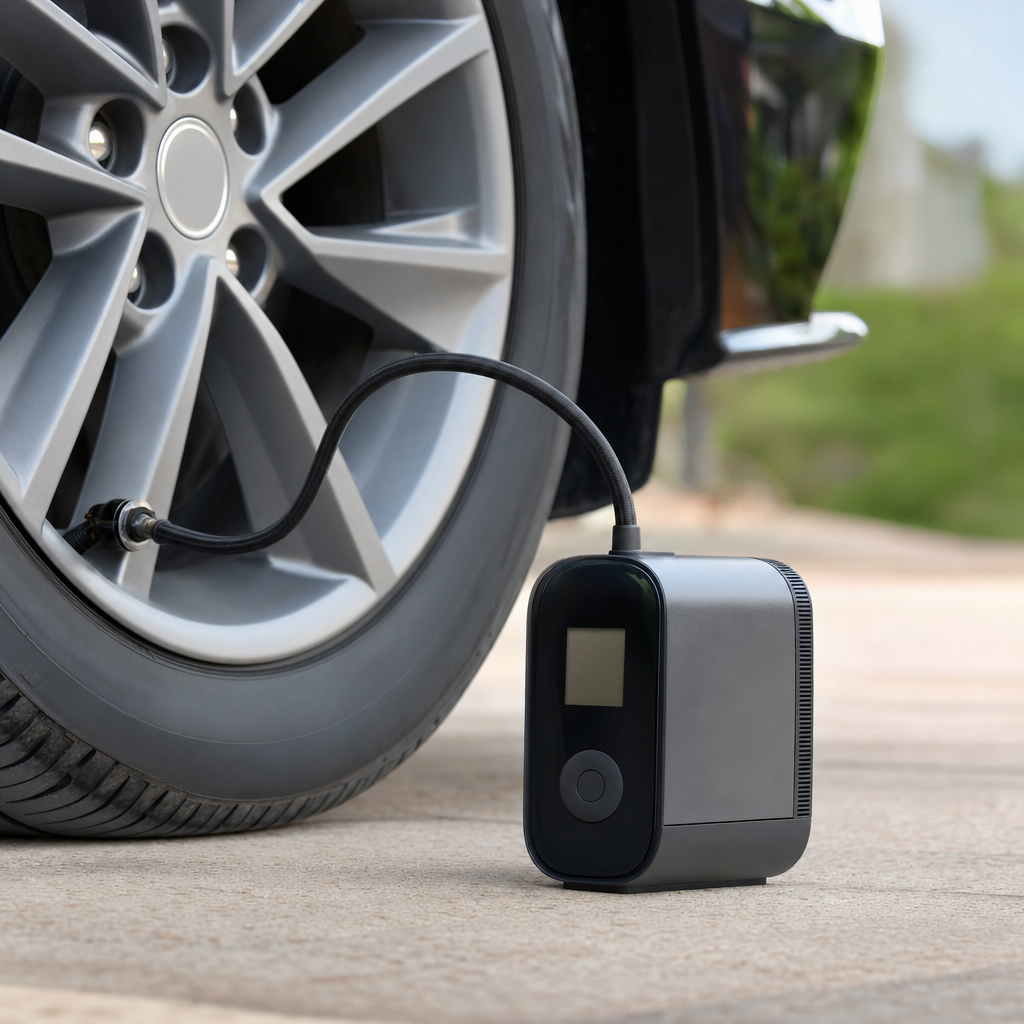
Understanding Portable Tire Inflators and Their Purpose
A portable tire inflator is a compact, motorized device designed to pump air into automotive tires, bicycle tires, sports equipment, and inflatables. Unlike the large, stationary air compressors found in professional service garages, these portable units are engineered to be stowed easily in a vehicle trunk, emergency kit, or garage storage shelf. They connect directly to your vehicle’s 12-volt accessory outlet, known commonly as the cigarette lighter, or operate via rechargeable lithium-ion battery packs. Having a reliable unit on hand ensures you can address unexpected drops in tire pressure caused by seasonal temperature fluctuations or slow punctures without needing to visit a service station immediately.
Maintaining correct tire pressure is not just about convenience; it is a fundamental aspect of vehicle safety and efficiency. Under-inflated tires generate excessive friction and heat, which can lead to premature tread wear, compromised handling, and even dangerous blowout scenarios on the highway. Conversely, over-inflated tires reduce the contact patch with the road surface, diminishing traction and causing a harsh, uncomfortable ride. When you search for the best tire inflator, you are ultimately looking for a reliable tool to keep your tires within the manufacturer-recommended pressure range, thereby optimizing fuel economy and maximizing the lifespan of your tire investment throughout the year.
Key Power Sources and Performance Characteristics
When evaluating different air compressors, the power source is one of the most critical factors influencing how and where you can use the device. Corded models that plug into the 12-volt DC socket offer continuous power, meaning you never have to worry about a battery dying mid-inflation during an emergency roadside situation. However, these units require you to maneuver a power cord around the vehicle, and your car engine typically needs to be running to avoid draining the starter battery. Battery-powered cordless inflators provide unmatched mobility and convenience, allowing you to top off tires in your driveway, at a remote trailhead, or on a bicycle path without dealing with tangled wires or being tethered to a vehicle.
Performance is measured primarily by inflation speed, maximum pressure capacity, and duty cycle limitations. Duty cycle refers to how long a compressor can run continuously before it requires a mandatory cooling period to prevent the motor from overheating. Heavy-duty models can handle large truck tires and sustained pumping sessions, while smaller compact units are best suited for quick top-offs on passenger cars, motorcycles, and bicycles. Checking the maximum PSI rating ensures the device can handle high-pressure applications, such as road bicycle tires that often require upwards of 100 PSI, whereas standard car tires typically hover between 32 and 35 PSI.
Essential Features and Digital Convenience Controls
Modern portable air pumps have evolved significantly beyond basic analog gauges and manual switches. Today, many popular models incorporate digital displays with preset capabilities, allowing the user to dial in the exact target pressure required by their vehicle. Once the preset is established, the unit automatically shuts off the moment the desired pressure is reached, eliminating the guesswork and the risk of accidental over-inflation. This automatic shut-off feature is particularly beneficial for drivers who may feel less confident handling traditional pressure gauges or monitoring analog dials while air flows into the tire valve stem.
Visibility and versatility are additional design elements that significantly enhance usability in real-world scenarios. Integrated LED work lights are exceptionally useful when you find yourself inflating a tire at night on a dark shoulder or in a dimly lit garage. Furthermore, premium packages often include a variety of specialized nozzle attachments and adapters stored directly on the chassis. These accessories allow you to inflate pool floats, air mattresses, basketballs, and bicycle tires equipped with Presta or Schrader valves, transforming a simple automotive tool into a versatile household utility device for various recreational needs.
Step-by-Step Guidance for Safe Tire Inflation
Using a portable air compressor safely requires following a systematic process to ensure accurate readings and prevent mechanical damage. First, park your vehicle on a flat, level surface away from traffic and engage the parking brake firmly. Locate the correct tire pressure specification for your vehicle, which is typically found on a placard affixed to the driver-side door jamb, rather than relying on the maximum pressure stamped on the tire sidewall. Unscrew the valve stem cap from the tire you wish to inflate and store it in a secure location, such as your pocket or the vehicle dashboard, so it does not get lost in the dirt or gravel.
Next, connect the inflator hose securely to the tire valve stem, ensuring a tight seal that prevents air from escaping during the pumping process. If your model features a screw-on connector, twist it clockwise until snug; if it uses a quick-release lever, push it down firmly onto the valve. Turn on the power switch or set your target pressure on the digital interface if applicable. Monitor the pressure gauge as air fills the tire chamber. Once the target pressure is achieved and the unit stops automatically, disconnect the hose quickly, replace the valve stem cap securely, and repeat the process for any other tires that require attention.
Maintenance and Best Practices for Longevity
Proper maintenance of your portable air pump ensures it will perform reliably when an emergency arises on the road. Always allow the device to cool down completely before wrapping the power cord or storage hose and stoking it away in its protective case or vehicle compartment. Storing a hot unit in an enclosed case can trap residual heat and degrade the internal motor components or melt plastic insulation over time. Keep the exterior clean and free from excessive dirt, moisture, and road salt, which can corrode electrical connections and mechanical switches stored in vehicle trunks through changing seasons.
For rechargeable battery-operated models, establishing a routine charging schedule is vital for long-term reliability. Lithium-ion batteries naturally lose a small percentage of their charge over time, even when not in use. It is a good practice to check the battery status of your cordless inflator every few months and top it off to full capacity. If your device relies on a 12-volt auxiliary plug fuse, inspect the inline fuse located inside the plug cap periodically to ensure it is not blown, as a blown fuse will prevent the unit from powering on when you need it most.
Frequently Asked Questions
How do I know the correct tire pressure for my car?
The correct pressure is listed on a safety placard located on the inside of the driver-side door jamb, and also in your owner’s manual. Do not use the maximum pressure printed on the tire sidewall.
Can a portable air pump handle completely flat tires?
Yes, most quality portable compressors can inflate a completely flat tire, but it will take significantly longer and may push the device to its duty-cycle limit, requiring mandatory cooling breaks.
Is it better to get a cordless or corded tire inflator?
Corded models offer unlimited run time using your car’s 12V outlet, while cordless models provide superior convenience and portability without dealing with power cords.
Why does my tire pressure drop when the weather gets cold?
As ambient temperatures drop, the air molecules inside the tire contract and lose pressure. Generally, tires lose about one to two PSI for every ten-degree drop in temperature.
Article Was Generated By AI.