
Understanding Tire Pressure and Why It Matters
Maintaining correct tire pressure is one of the most critical aspects of routine vehicle maintenance, yet it is frequently overlooked by many drivers. Proper inflation ensures that your vehicle handles predictably, stops efficiently, and maintains optimal traction on wet or dry roads. When tires are under-inflated, the sidewalls flex excessively, generating dangerous heat that can lead to premature tread wear or catastrophic blowout events. Conversely, over-inflation reduces the contact patch between the tire and the road surface, diminishing braking capability and resulting in a harsh, uncomfortable ride quality.
Beyond safety, monitoring your tire pressure with a reliable instrument directly impacts your wallet through improved fuel economy. Under-inflated tires create rolling resistance, forcing the engine to work harder and consume more gasoline to maintain speed. Industry studies consistently show that keeping your tires inflated to the manufacturer recommended specification can improve fuel efficiency by a noticeable margin over the course of a year. Furthermore, proper inflation extends the overall lifespan of your tire tread, delaying the costly expense of purchasing replacement sets prematurely while reducing environmental waste.
The Three Main Types of Tire Pressure Gauges
When shopping for the best tire pressure gauge, you will generally encounter three primary designs: stick gauges, dial gauges, and digital gauges. Stick gauges, often referred to as pencil gauges, are the traditional pocket-sized tools featuring a calibrated metal bar that slides out when pressed onto the valve stem. They are typically inexpensive, highly portable, and require no batteries, making them a staple in many glove compartments. However, they can be difficult to read precisely in dim lighting and may lose calibration over time if dropped or exposed to harsh physical impacts.
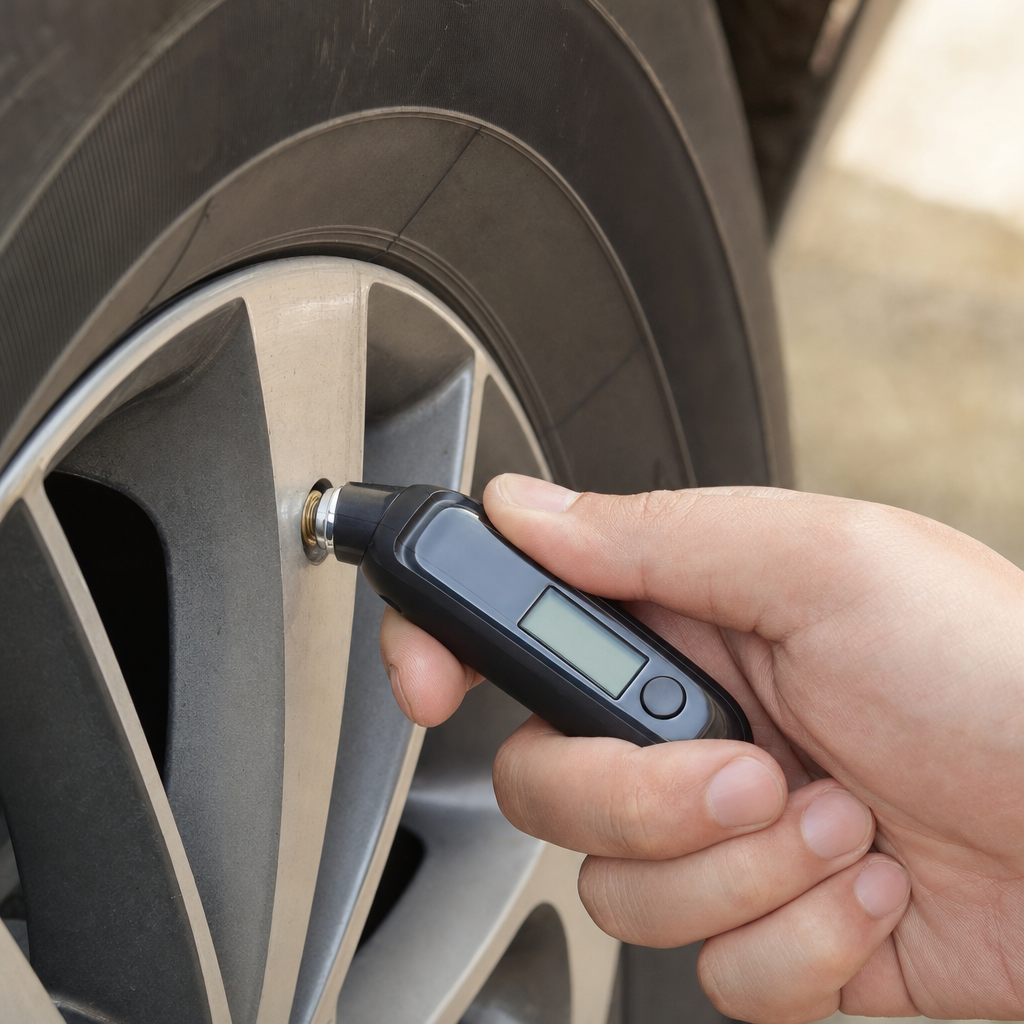
Dial gauges feature a circular mechanical face with a needle pointer that indicates the exact pressure reading, similar to a traditional clock. These models often provide superior readability compared to pencil gauges and frequently include a pressure release valve to let air out if a tire is overfilled. Digital gauges represent the modern evolution of tire maintenance tools, utilizing an electronic sensor to display the exact measurement on an LCD screen. Digital options excel in dark environments thanks to backlit screens and often offer the highest perceived precision for everyday vehicle owners.
Key Features to Look For When Shopping
Selecting the most suitable monitoring tool involves evaluating several essential features that impact daily usability and long-term durability. Calibration accuracy is paramount; look for gauges that adhere to recognized industrial standards, such as ANSI or international equivalents, to ensure your readings are trustworthy. The pressure range is another vital consideration because heavy-duty trucks require significantly higher PSI thresholds than standard passenger cars, economy sedans, or compact crossover utility vehicles.
Ergonomics and construction materials also dictate how satisfied you will be with your choice over years of regular usage. Solid brass or stainless-steel housings resist corrosion and withstand being dropped on concrete garage floors much better than cheap plastic alternatives. Additionally, features such as swivel chucks, flexible rubber hoses, and bleeder valves make it much easier to attach the gauge securely to awkward valve stems located behind custom wheel spokes or in tight wheel wells.
Best Practices for Measuring Tire Pressure Accurately
Obtaining accurate measurements requires following specific timing and procedural guidelines to account for physical temperature changes in the air inside the tire. You should always check your tire pressure when the vehicle has been parked for at least three hours or driven less than a mile at low speeds. Driving generates friction that heats the air inside the tires, causing it to expand and yield artificially high pressure readings that do not reflect your true cold inflation baseline measurements.
To ensure consistent results during every maintenance session, establish a methodical routine that covers all four tires systematically, including your full-size spare if equipped. Remove the protective valve cap, press the gauge firmly and squarely onto the valve stem until the hissing sound of escaping air stops, and record the displayed measurement. If the pressure is too low, use an air compressor to add air and recheck; if it is too high, press the bleeder valve slightly to release air until you hit the precise target specification.
Maintenance, Storage, and Calibration Checks
Proper care ensures that your chosen pressure monitoring tool maintains its accuracy and reliability over many years of service. Store mechanical and digital gauges in protective cases or designated vehicle storage compartments to shield them from extreme temperature fluctuations, moisture, and dust accumulation. If you rely on a digital model, remember to inspect and replace the internal batteries periodically to prevent sudden power failures when you need to check your tires in an emergency.
Even high-end gauges can drift out of calibration over time due to accidental drops, rough handling, or normal mechanical wear and tear. You can verify the accuracy of your personal gauge by comparing its readings against a trusted reference gauge at a local automotive service center or professional tire shop. If you notice consistent discrepancies of more than two PSI across multiple tests, it is generally time to replace the tool to maintain safe vehicle operation.
Commonly Asked Questions About Tire Pressure Gauges
How often should I check my tire pressure?
You should check your tire pressure at least once a month and before embarking on any long road trips. Additionally, check your tires whenever outside temperatures swing dramatically, as air pressure drops about one PSI for every ten-degree drop in ambient temperature.
Where can I find the correct tire pressure for my vehicle?
The correct cold tire pressure is specified by the vehicle manufacturer and can be found on a placard located on the driver-side doorjamb. You can also reference the vehicle owner manual, but never use the maximum pressure stamped on the tire sidewall.
Are digital gauges more accurate than analog dial gauges?
Not necessarily. While digital gauges offer easier readability and eliminate human error in interpreting needle positions, a high-quality analog dial gauge can be just as precise. Accuracy depends more on manufacturing quality than the display type.
Do I still need a manual gauge if my car has a TPMS system?
Yes, manual gauges are still essential tools. Factory Tire Pressure Monitoring Systems typically only warn you when pressure drops drastically by 25 percent or more, whereas a manual gauge allows you to maintain optimal pressure proactively for fuel economy.
Article Was Generated By AI.