
Understanding On-Board Diagnostics and Diagnostic Scanners
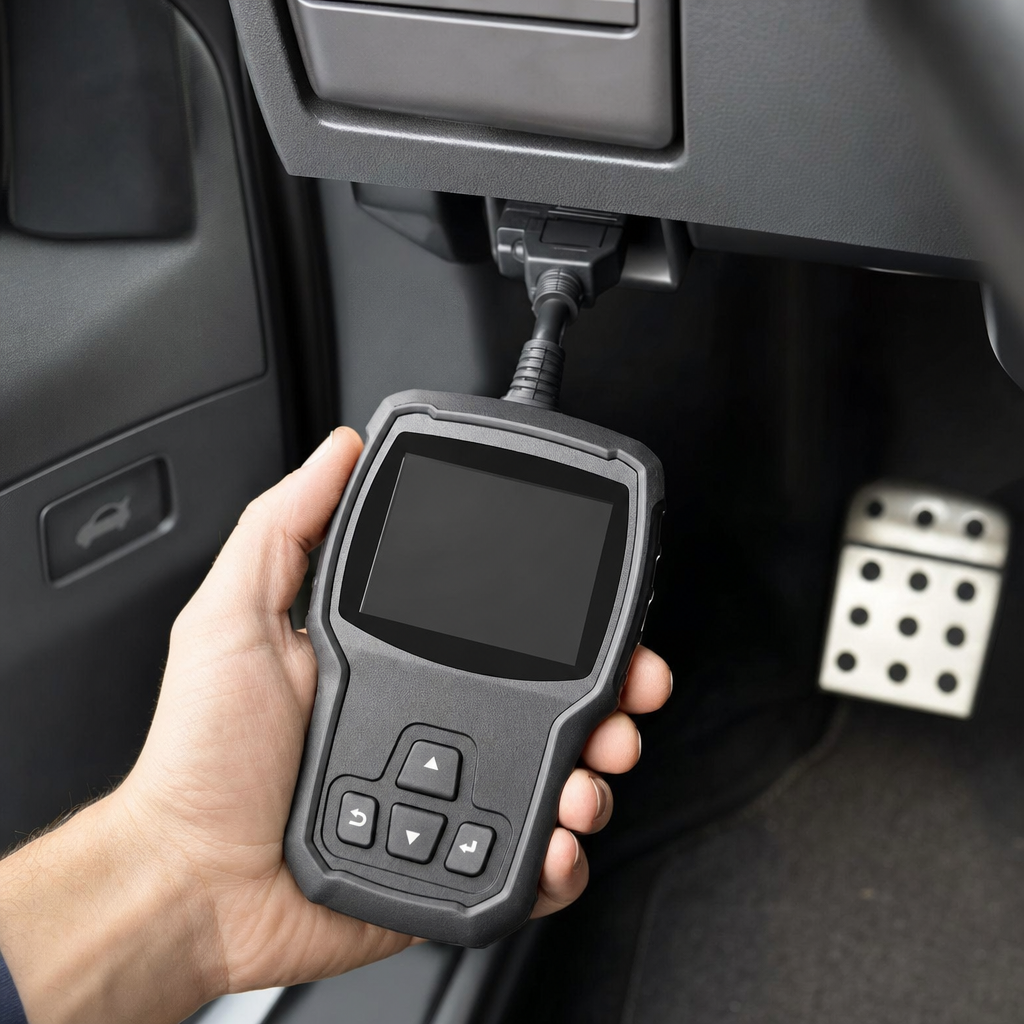
Modern automobiles rely heavily on computerized networks to monitor engine performance, emissions systems, anti-lock brakes, and transmission health. When an anomaly occurs within any of these interconnected systems, the vehicle’s internal computer triggers a dashboard warning light, most commonly known as the check engine light. To interpret these alerts, automotive technicians and vehicle owners utilize specialized diagnostic tools commonly referred to as OBD2 scanners. These electronic devices plug directly into a standardized data link connector located underneath the driver-side dashboard, establishing a communication bridge between the car and the user.
The standardized protocol known as OBD-II became mandatory for all passenger vehicles sold in the United States starting in the 1996 model year, creating a universal diagnostic language across different manufacturers. Before this regulation, every automaker used proprietary diagnostic ports and codes, making vehicle repair exceptionally difficult for independent mechanics and everyday consumers. Today, any compatible scanner can retrieve standardized diagnostic trouble codes from virtually any modern car, truck, or SUV. These alphanumeric codes pinpoint specific component failures, helping motorists understand whether an illuminated dashboard light signifies a loose gas cap, a failing oxygen sensor, or a more serious engine misfire.
Beyond simply reading and clearing trouble codes, contemporary diagnostic tools offer sophisticated capabilities that extend far beyond basic troubleshooting. Advanced models can display live sensor data in real time, allowing users to monitor engine temperature, fuel trim levels, manifold pressure, and oxygen sensor voltage while driving the vehicle. Furthermore, many modern scanners support readiness monitors, which verify whether all emission control components have completed their self-tests. This feature is particularly valuable when preparing a vehicle for state emissions inspections, ensuring motorists do not waste time and money visiting a testing station prematurely.
Categorizing Diagnostic Tools: From Basic Code Readers to Advanced Bi-Directional Scanners
When searching for the best OBD2 scanner, shoppers quickly realize that diagnostic equipment spans a massive spectrum of price points, physical formats, and technical capabilities. Entry-level devices are typically compact handheld units designed exclusively for reading and clearing generic powertrain codes. These budget-friendly tools are exceptionally user-friendly, making them ideal for everyday drivers who simply want to know why a check engine light appeared without deciphering complex technical data. However, they generally cannot access manufacturer-specific systems like anti-lock braking systems, airbag modules, or tire pressure monitoring systems.
Stepping up into the mid-range category introduces enhanced diagnostic scanners that communicate with multiple vehicle modules beyond the basic powertrain computer. These units often feature larger color screens, graphical live data displays, and built-in library definitions for thousands of diagnostic trouble codes. They can usually retrieve ABS, SRS, and transmission codes across a wide variety of domestic, Asian, and European vehicle makes. For home mechanics who enjoy performing their own routine maintenance and light repairs, mid-tier scanners strike an optimal balance between affordability, comprehensive coverage, and professional-grade diagnostic insights.
At the top of the spectrum lie professional bi-directional scan tools and tablet-based diagnostic systems utilized by certified automotive technicians in professional repair facilities. Bi-directional capability is a game-changing feature because it allows the scanner to send commands to the vehicle computer rather than merely receiving data. Technicians can use this functionality to actively command components such as fuel injectors, cooling fans, window motors, and ABS solenoids to test their operational integrity. While these advanced systems represent a significant financial investment, they are indispensable for complex electrical troubleshooting and comprehensive automotive repair operations.
Evaluating Key Features: What to Look for Before Making a Selection
Choosing the right diagnostic tool requires careful consideration of several essential hardware and software features that dictate everyday usability. Display quality and interface design significantly impact how easily a user can navigate menus, read diagnostic codes, and interpret graphical data streams. Units equipped with vibrant color screens and intuitive button layouts or responsive touchscreens reduce user frustration during diagnostic procedures. Additionally, devices that offer free lifetime software updates ensure that your investment remains relevant as automobile manufacturers introduce new models with updated computer protocols and proprietary systems.
Connectivity options have evolved rapidly, giving buyers a choice between traditional tethered handheld units and wireless dongles that pair with smartphones or tablets. Wireless adapters utilize Bluetooth or Wi-Fi to transmit diagnostic data to mobile applications running on iOS or Android devices. These smartphone-integrated tools are remarkably portable, often slipping easily into a glove compartment or center console while offering rich graphical displays driven by the processing power of your phone. Conversely, standalone wired scanners require no smartphone pairing, eliminating potential connectivity glitches and ensuring the tool is always ready for immediate deployment.
Compatibility is another critical factor, as some affordable scanners are limited to generic powertrain codes while others offer deep diagnostic coverage for specific vehicle brands. If you own multiple vehicles from different manufacturers, investing in a multi-brand scanner with extensive coverage across Asian, European, and domestic nameplates is essential. Furthermore, consider whether the tool supports specialized service resets, such as electronic parking brake retraction for rear brake pad replacements, steering angle sensor calibration, and battery registration procedures required by modern vehicle electrical management systems.
Practical Guidance: How to Use an OBD2 Scanner Effectively
Operating a diagnostic scanner is a straightforward process, but following correct procedures ensures accurate results and prevents potential damage to your vehicle electrical system. First, locate the diagnostic link connector inside your vehicle, which is mandated by law to be situated within three feet of the driver seat, typically beneath the dashboard near the steering column. Turn your vehicle ignition key to the ON position without starting the engine, or press the push-to-start button without depressing the brake pedal, which powers up the onboard computer networks and allows the scanner to establish communication.
Once the tool is connected and powered up, follow the on-screen prompts to input your vehicle identification number or manually select the year, make, model, and engine size. The scanner will automatically scan all available computer modules and compile a list of any active or stored diagnostic trouble codes. Always make a written record of these codes along with their descriptive definitions before attempting to clear them from the system. Clearing codes without addressing the underlying mechanical or electrical fault will simply cause the warning light to illuminate again after driving a short distance.
- Always turn the ignition key to the ON position before attempting to connect or read codes with your scanner.
- Record all retrieved trouble codes and descriptions on paper before executing any code-clearing commands.
- Utilize live data graphing functions to observe sensor behavior while the engine is running to verify component faults.
- Complete a standard drive cycle after clearing codes if you need to reset readiness monitors for emissions testing.
When interpreting diagnostic results, remember that a trouble code points toward a specific circuit or system failure rather than automatically condemning a specific part. For instance, an oxygen sensor code might indicate a failing sensor, but it could also be triggered by a vacuum leak, a faulty fuel injector, or an exhaust manifold crack. Utilizing the live data graphing feature of your scanner helps verify component behavior before purchasing expensive replacement parts. Taking a methodical approach saves time, prevents unnecessary spending, and ensures accurate automotive repairs.
Common Diagnostic Challenges and Misconceptions
Many vehicle owners mistakenly believe that connecting an OBD2 scanner will instantly tell them exactly what part to replace to fix a dashboard warning light. In reality, diagnostic trouble codes are symptom identifiers rather than absolute diagnoses, and multiple underlying issues can trigger the exact same code. Understanding this distinction is vital for avoiding the common pitfall of replacing expensive components based solely on a code number. Experienced technicians use diagnostic codes merely as a starting point for systematic electrical and mechanical testing.
Another frequent point of confusion involves pending codes versus confirmed trouble codes stored within the vehicle computer memory. A pending code indicates that the computer has detected an abnormal sensor reading during a single drive cycle, but the fault has not occurred frequently enough to illuminate the check engine light. If the anomaly happens repeatedly over subsequent drive cycles, the pending code graduates to a confirmed code, and the dashboard light illuminates. Monitoring pending codes can often alert motorists to developing mechanical issues before they escalate into major roadside breakdowns.
Finally, drivers should be aware that clearing trouble codes immediately erases internal monitor readiness statuses, which can temporarily prevent a vehicle from passing an official emissions inspection. When you disconnect a battery or clear diagnostic codes using a scanner, the vehicle computer resets its internal self-test monitors for components like catalysts, oxygen sensors, and evaporative emissions. Driving the car through a specific sequence of highway and city conditions, known as a drive cycle, is necessary for these monitors to run and set to ready status once again.
Frequently Asked Questions
Will any OBD2 scanner work on any car?
Yes, any standard OBD2 scanner will work on any gasoline-powered passenger vehicle sold in the United States from 1996 onward, and diesel vehicles from 2008 onward, due to federally mandated protocol standards.
Can an OBD2 scanner clear airbag or ABS warning lights?
Basic entry-level code readers generally cannot access airbag and ABS systems. You will need a mid-range or advanced diagnostic scanner specifically advertised as having SRS and ABS diagnostic capabilities.
Does clearing codes fix the underlying car problem?
No, clearing codes simply turns off the dashboard warning light and erases computer memory. If the mechanical or electrical fault has not been repaired, the warning light will return shortly.
Are wireless smartphone OBD2 scanners as good as handheld units?
Wireless smartphone adapters offer excellent live data graphing and portability at a lower price point, while dedicated handheld units provide standalone reliability without requiring phone pairing or app management.
Article Was Generated By AI.