
Understanding Roadside Preparedness
Vehicle breakdowns and unexpected mechanical failures can happen to anyone, often at the most inconvenient times and locations. Having a reliable emergency kit in your trunk provides a crucial layer of safety and self-reliance while you wait for professional assistance to arrive. Whether you commute daily through heavy urban traffic or take long road trips across rural highways, being prepared for minor automotive mishaps significantly reduces stress. A well-stocked kit bridges the gap between a stressful roadside situation and a manageable inconvenience, keeping you and your passengers safe until help reaches your exact location.
Many drivers mistakenly assume that modern vehicles are entirely immune to unexpected failures, yet flat tires, dead batteries, and electrical glitches remain remarkably common. When these incidents occur on busy interstates or remote country roads, visibility and signaling become your absolute top priorities to prevent secondary collisions. Standard factory equipment is rarely comprehensive enough to handle every unexpected scenario, which is why thoughtful preparation matters. Evaluating your typical driving habits and environmental conditions allows you to anticipate potential hazards and assemble a customized selection of tools tailored specifically to your vehicle.
Essential Components of a Reliable Kit
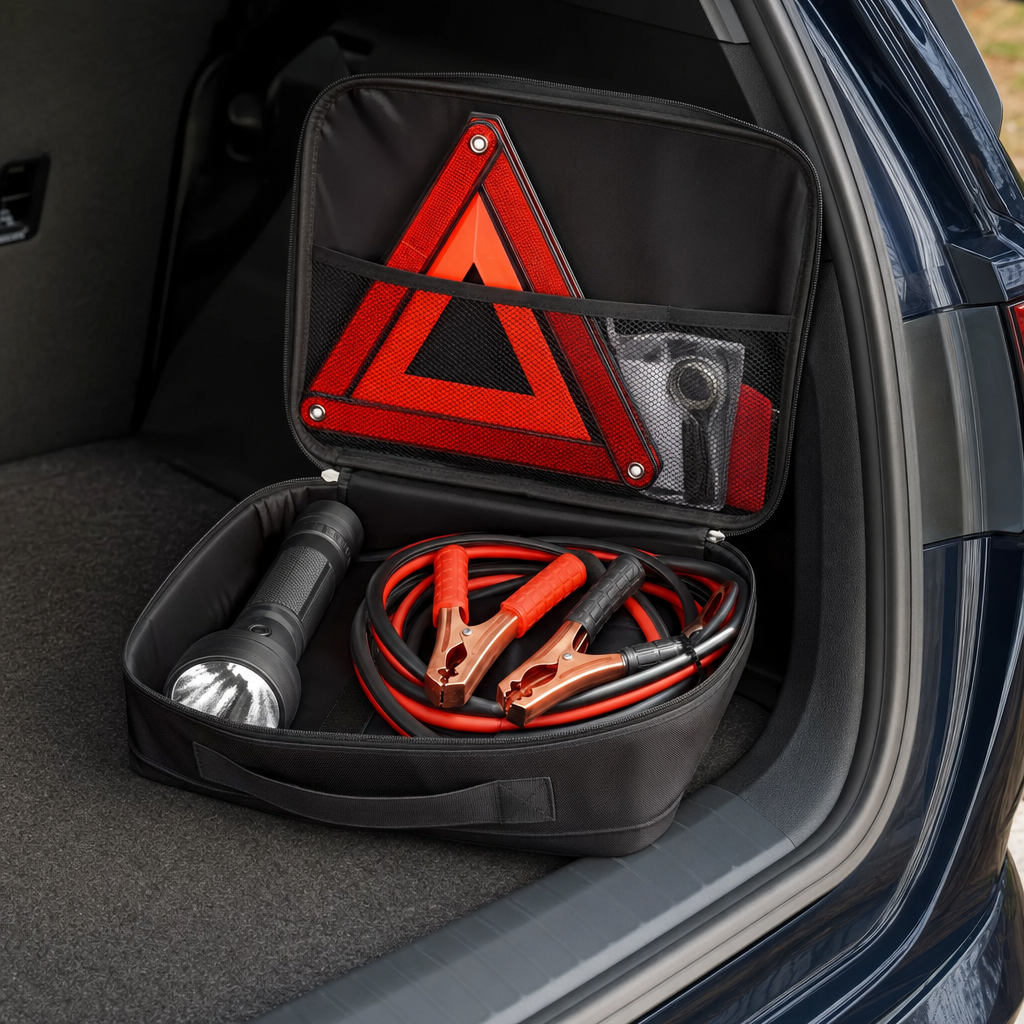
Every effective emergency kit starts with tools designed for visibility and hazard signaling, ensuring approaching drivers can spot your disabled vehicle from a safe distance. Reflective triangles, LED road flares, and high-visibility vests are non-negotiable items that protect you while changing a tire or inspecting an engine compartment. These signaling devices are especially vital during nighttime hours, heavy rain, or blinding snowstorms when visibility drops dramatically. Storing these items in an easily accessible pouch near the trunk opening prevents you from having to rummage through heavy luggage during an already tense moment.
Beyond visibility, mechanical support tools form the backbone of any practical emergency collection. Heavy-duty jumper cables are indispensable for reviving a drained battery caused by accidentally leaving headlights on or enduring extreme weather temperatures. A sturdy pair of work gloves protects your hands from sharp metal edges, hot engine components, and dirty tire treads while you work. Including a reliable tire pressure gauge, a multi-bit screwdriver, and an adjustable wrench equips you to handle basic tightening, checking, and minor adjustments without needing a full mechanic’s garage in your trunk.
- Heavy-duty jumper cables with proper gauge wire for reliable electrical transfer
- Reflective warning triangles and LED flares for enhanced nighttime visibility
- A multi-bit screwdriver and adjustable wrench for simple mechanical fasteners
- Durable leather-palmed work gloves to protect hands from heat and sharp edges
- A compact LED flashlight with extra batteries or hand-crank capability
Personal Safety and Comfort Supplies
While mechanical tools get your car running, personal comfort and medical supplies protect the occupants while you wait. A comprehensive first-aid kit stocked with adhesive bandages, antiseptic wipes, gauze pads, and pain relievers addresses minor cuts and scrapes that often happen during roadside repairs. Weather conditions can change rapidly, leaving stranded motorists shivering in freezing temperatures or sweltering in summer heatwaves. Packing emergency thermal blankets, rain ponchos, and extra layers of clothing ensures everyone stays safe and comfortable regardless of the forecast outside.
Hydration and nutrition are additional factors that drivers frequently overlook when preparing for potential delays on major highways. Keeping a few bottles of purified water and high-energy non-perishable snacks like protein bars or trail mix in your trunk provides peace of mind. This is particularly crucial if you travel with children, elderly family members, or pets who have lower tolerance for hunger and dehydration. Regularly rotating these consumable items every six months prevents them from expiring or degrading due to fluctuating trunk temperatures throughout changing seasons.
Tailoring Your Kit to Climate and Environment
Geographic location and seasonal shifts play a massive role in determining what supplies you truly need in your vehicle. Drivers navigating harsh winter environments face frozen locks, snow-packed tires, and treacherous ice sheets that demand specialized gear. Adding a collapsible snow shovel, a bag of traction sand or non-clumping kitty litter, and an ice scraper with a brass blade transforms a standard setup into a winter survival asset. These specific additions help you regain traction if your tires slip in deep snowbanks or icy patches along untreated rural roadways.
Conversely, motorists driving through arid desert climates or spending long hours under intense summer sun face entirely different environmental challenges. Overheating engines, tire blowouts caused by scorching asphalt, and rapid dehydration present serious risks in remote regions. In these scenarios, prioritizing extra coolant, large quantities of drinking water, and a portable tire inflator running on 12-volt power becomes much more critical than snow shovels. Assessing your routine travel corridors ensures your emergency inventory matches the realistic environmental hazards you are most likely to encounter.
Maintenance and Storage Best Practices
Assembling a thorough emergency kit is only the first step; maintaining its contents guarantees it will perform when an unexpected crisis arises. Many drivers pack a trunk and forget about it for years, only to discover corroded flashlight batteries, expired medical supplies, or melted plastic packaging. Establishing a biannual review schedule tied to daylight saving time changes allows you to inspect, test, and refresh your gear effortlessly. Checking flashlight bulbs, replacing outdated snacks, and verifying that electronic devices hold a charge keeps your preparedness level consistently high.
Proper organization and secure storage prevent emergency items from rolling around, rattling, or becoming damaged during normal daily driving. Hard-sided storage bins or durable canvas tool bags keep loose components contained and easy to grab in a hurry. Make sure that whatever storage method you choose allows quick access to high-priority items like flashlights and reflective vests without unloading your entire grocery haul. Securing the kit with straps or Velcro anchors also prevents it from becoming a dangerous projectile in the event of a sudden, unexpected collision.
Frequently Asked Questions
Should I buy a pre-made kit or build my own?
Pre-made kits offer convenience and cover basic needs immediately, but custom-built kits allow you to choose higher-quality tools and tailor supplies to your specific climate and driving habits.
How often should I inspect my roadside emergency supplies?
You should thoroughly check and audit your emergency kit at least twice a year, replacing expired food, updating first-aid items, and testing flashlights and portable battery packs.
What is the single most important item to include?
Visibility items such as reflective warning triangles and LED flares are widely considered the most critical, as protecting yourself from oncoming traffic takes precedence during any breakdown.
Can extreme trunk temperatures ruin my emergency gear?
Yes, extreme heat and freezing cold can degrade items like bottled water, medical supplies, and alkaline batteries, making regular seasonal maintenance and rotation essential for reliability.
Article Was Generated By AI.