
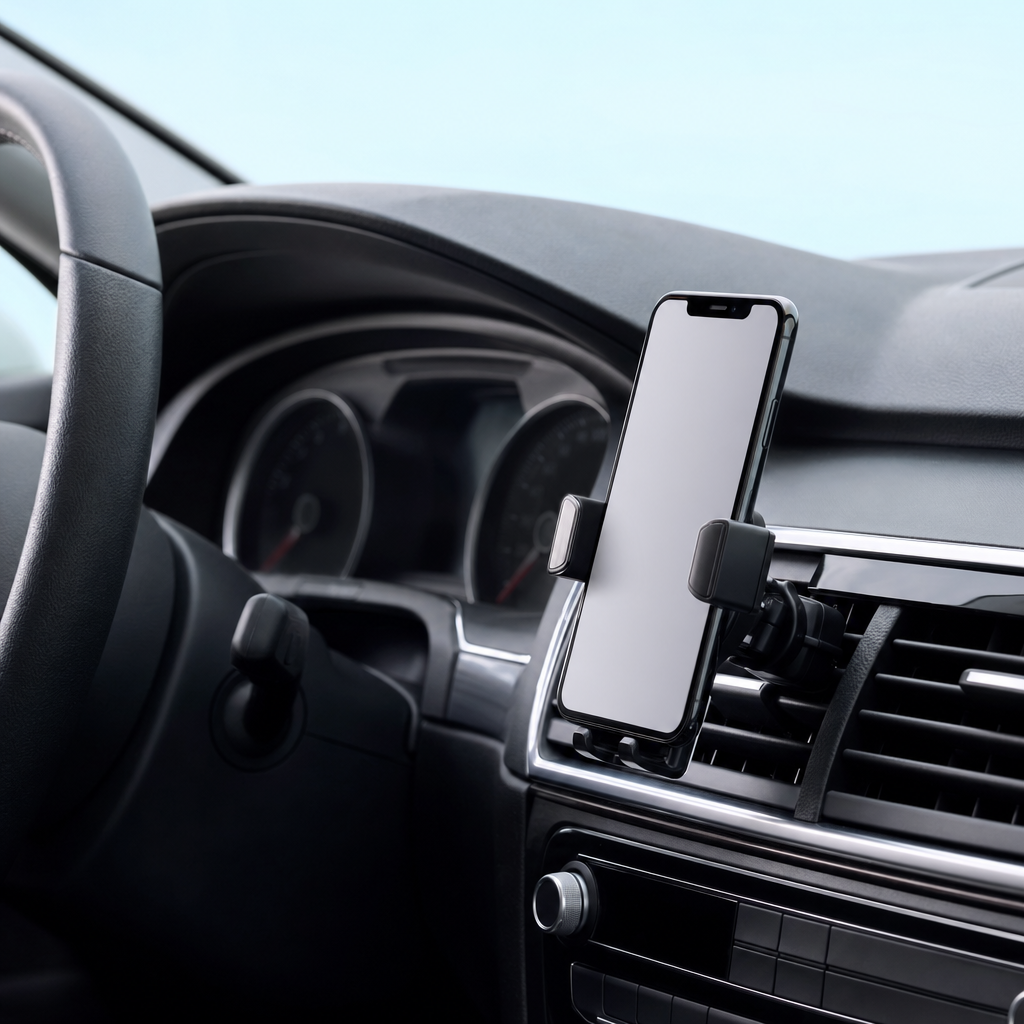
Understanding the Role of Car Phone Mounts
Searching for the best car phone mount is a common quest for modern drivers who rely heavily on GPS navigation, hands-free calling, and streaming audio during their daily commutes. A properly selected holder keeps your device within your peripheral vision, minimizing the dangerous temptation to look down into your lap or fiddle with a loose handset on the passenger seat. Beyond mere convenience, these accessories play a critical role in promoting safer driving habits by keeping your hands firmly on the steering wheel and your eyes focused squarely on the road ahead.
However, not all holders are created equal, and what works wonderfully in a compact sedan might fail completely inside a rugged pickup truck. Vehicle interiors vary dramatically in dashboard texture, air vent design, and windshield angle, meaning that a universal solution rarely exists. Understanding the different mechanical designs available on the market allows you to bypass poorly rated gadgets and zero in on a style that complements your specific vehicle layout, ensuring a secure grip even when navigating potholes, speed bumps, and sharp turns.
Exploring Common Mounting Styles and Mechanisms
Vent-clip holders are among the most popular choices because they attach directly to your climate control louvers, placing the phone at a natural mid-level height without obstructing your view through the windshield. They are exceptionally easy to install and transfer between different automobiles, making them favorites for rental car users. However, they can block airflow from your heater or air conditioner, which might cause your smartphone to overheat on sunny summer afternoons or cool down excessively during harsh winter months.
Dashboard and windshield mounts typically rely on a suction cup base reinforced with a sticky gel pad to adhere firmly to glass or textured plastic surfaces. These models often feature adjustable telescopic arms that bring the device closer to the driver, making it easier to read map directions at a glance. On the downside, extended arms can vibrate significantly on rough roads, and suction cups occasionally lose their grip over time due to extreme temperature fluctuations inside a parked vehicle.
CD slot mounts represent another clever engineering approach, utilizing the rarely used optical disc player opening to anchor a sturdy platform for your device. This keeps the phone securely positioned in the center stack without leaving sticky residue on your dashboard or cluttering your air vents. While highly stable, this style does render your CD player inaccessible for as long as the base remains inserted, which could frustrate drivers who still enjoy physical compact discs and audiobooks.
Comparing Magnetic Versus Cradle Grips
Magnetic holders have surged in popularity due to their sleek profile and unmatched ease of use. By attaching a thin metal plate to the back of your smartphone or slipping it inside your protective case, you can snap the phone onto the magnetic head with a single swift motion. This design accommodates phones of virtually any dimension without requiring manual adjustments to side arms, and it allows for effortless 360-degree rotation between portrait and landscape viewing modes during your commute.
Despite their convenience, magnetic systems come with a few trade-offs worth noting before you make a selection. The metal plate affixed to your device can occasionally interfere with wireless charging capabilities unless positioned carefully near the bottom of the phone. Furthermore, extremely bumpy off-road driving or sudden heavy impacts can sometimes cause exceptionally heavy smartphones to slide or detach from weak magnets, leading to unexpected drops onto the floorboards.
Mechanical cradle grips offer a more traditional yet foolproof method of securing your hardware by using spring-loaded arms, gravity mechanisms, or push-button releases to clamp around the edges of the device. These models ensure a tight, physical enclosure that will not let go even during aggressive maneuvers or sudden braking incidents. Many modern cradles also incorporate built-in Qi wireless charging coils, allowing you одновременно to power up your battery while holding the phone steady for navigation.
Key Factors to Consider Before Choosing
Evaluating your smartphone’s physical dimensions and weight is a crucial preliminary step in your search for the right accessory. Larger, heavy-duty phablets require robust clamping mechanisms and sturdy mounting bases, whereas standard-sized phones can comfortably utilize lightweight magnetic vents. Additionally, you must account for your bulky protective cases, as thick rugged shells often fail to fit inside narrow mechanical cradles or prevent strong magnetic connection.
Local legal regulations regarding forward visibility represent another critical boundary you cannot afford to ignore. Many jurisdictions enforce strict traffic laws that prohibit attaching any object to the front windshield or positioning items in a way that obstructs the driver’s view of the road, pedestrians, and traffic signals. Checking your regional motor vehicle codes ensures that your chosen mounting location keeps you fully compliant with the law and prevents costly traffic citations.
Practical Tips for Proper Installation and Maintenance
Achieving maximum stability from a dashboard or windshield mount requires meticulous surface preparation before you press the suction cup into place. Always wipe the mounting area thoroughly with an alcohol swab to remove dust, armor-all residue, and natural skin oils that weaken adhesive bonds. Allow the surface to dry completely, and if your model features a locking lever, press it down firmly to evacuate all trapped air from beneath the gel pad for a lasting hold.
Routine maintenance prolongs the functional lifespan of your hardware accessory and prevents sudden mid-drive failures. Periodically inspect the tightening knobs, ball joints, and spring mechanisms to ensure they have not loosened from constant vehicle vibrations. For suction-based models that begin to slip over time, simply rinse the gel pad under warm water to wash away accumulated dust and lint, let it air dry naturally, and its original sticky properties will be fully restored.
Frequently Asked Questions About Car Phone Mounts
Will a magnetic car mount damage my smartphone or delete my data?
No, standard neodymium magnets used in these accessories do not damage modern flash memory, internal components, or smartphone screens. However, they may occasionally interfere with internal digital compasses until recalibrated.
Can I use a phone mount while simultaneously charging my device wirelessly?
Yes, many modern mounts feature built-in Qi wireless charging pads. They hold your phone securely in place while transferring power inductively, provided your car adapter supplies enough electrical amperage.
What is the safest spot on my dashboard to place a phone holder?
The safest placement keeps the device within your natural line of sight without blocking the windshield or interfering with airbag deployment zones, typically near the center console or lower dashboard.
Why does my suction cup mount keep falling off during hot summer days?
Extreme cabin heat causes trapped air behind the suction cup to expand, breaking the vacuum seal. Cleaning the pad with water and using a dedicated dashboard mounting disc can resolve this.
Article Was Generated By AI.