
Introduction to Vehicle Paint Protection
Maintaining your vehicle exterior involves much more than simply running it through a local automatic car wash every few weeks. Environmental contaminants such as ultraviolet radiation, industrial fallout, acidic tree sap, and stubborn bird droppings constantly bombard your automobile exterior. Without an adequate sacrificial barrier, these elements slowly oxidize the clear coat, leading to dullness, fading, and eventual paint failure. Applying a protective coating provides an essential shield between the elements and your vehicle sensitive finish.
When searching for the best car wax for your specific needs, you will encounter a diverse market filled with traditional pastes, modern liquids, and advanced synthetic formulations. Each category offers distinct advantages regarding durability, ease of application, and overall depth of shine. Understanding how these products interact with modern automotive clear coats allows vehicle owners to make informed decisions that match their maintenance routines, local climate conditions, and personal aesthetic preferences without falling for marketing hype.
Categories of Waxes and Sealants
Natural carnauba wax remains a legendary favorite among detailing enthusiasts due to its unmatched warmth, depth, and rich gloss. Harvested from the leaves of a Brazilian palm tree, pure carnauba is naturally hydrophobic, causing water to bead up instantly and slide off painted surfaces with ease. However, natural carnauba typically has a shorter lifespan than synthetic alternatives, often lasting between four to eight weeks before requiring reapplication. Enthusiasts who enjoy regular weekend detailing often prefer natural formulas for show cars and weekend cruisers.
Synthetic paint sealants utilize man-made polymer chemistry to create a microscopic cross-linked barrier over your vehicle paint. These advanced formulas generally offer superior durability compared to natural waxes, frequently protecting surfaces for four to six months through harsh weather conditions. While they historically lacked the deep, wet look of carnauba, modern polymer technology has narrowed the aesthetic gap significantly. Many car owners choose synthetic sealants for daily drivers where longevity and reliable year-round environmental protection take priority.
Hybrid products combine the best attributes of both natural carnauba and synthetic polymers into a single convenient bottle. These formulations leverage synthetic cross-linking polymers for long-lasting foundation durability while infusing carnauba extracts to deliver that signature high-gloss finish. Available in traditional liquid formats or modern spray-on rinse-off variations, hybrid solutions appeal greatly to vehicle owners seeking professional-level results with significantly reduced application time and physical effort during routine maintenance sessions.
Preparation Steps for Optimal Adhesion
Even the best car wax available on the market will underperform if applied to a contaminated or poorly prepared painted surface. Thorough washing is the mandatory first step, utilizing the two-bucket method with a quality automotive shampoo to safely lift loose dirt particles without inducing swirl marks. After washing, inspecting the paint via the tactile plastic bag test reveals embedded microscopic debris such as industrial fallout, brake dust, and rail dust that regular washing simply cannot remove from the pores of the clear coat.
Using a fine-grade automotive clay bar or synthetic clay mitt alongside a dedicated lubricant effectively shears away bonded contaminants, leaving the paint surface feeling glass-smooth. Following the decontamination phase, many detailers incorporate a chemical paint cleanser or a light mechanical polish to eliminate minor oxidation, light wash marring, and previous wax residue. Removing these surface imperfections ensures maximum optical clarity and creates a pristine microscopic bond between the fresh wax layer and the vehicle clear coat.
- Perform a thorough two-bucket hand wash to remove loose surface dirt and road grime.
- Inspect the paint texture and use a detailing clay bar with lubricant to eliminate bonded contaminants.
- Apply a paint cleaner or finishing polish to correct minor swirls and maximize surface clarity.
- Wipe down the entire vehicle with an isopropyl alcohol dilution to remove residual polishing oils.
Application Techniques and Best Practices
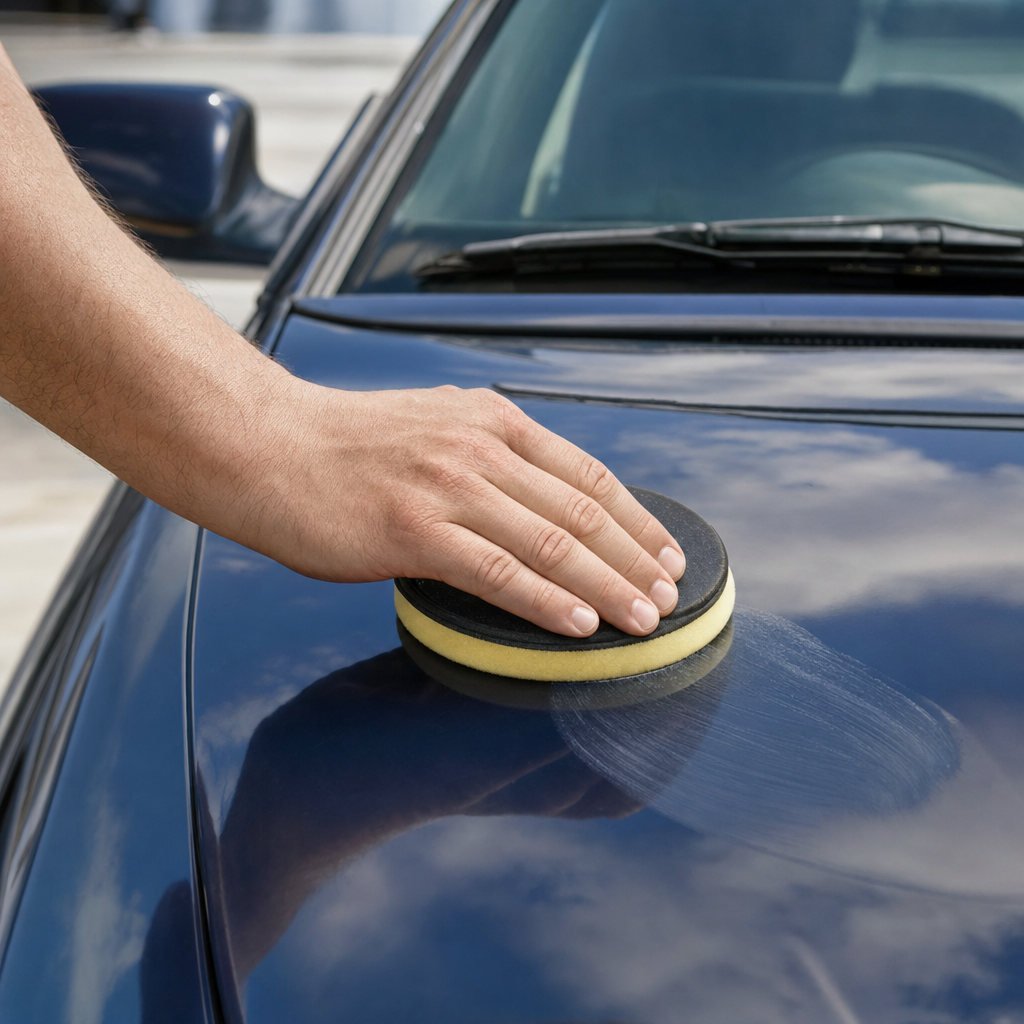
Applying wax correctly is just as important as choosing the right product for your automobile finish. The golden rule of car wax application is that thinner is always better; laying down a heavy, thick layer does not increase protection and only makes the removal process unnecessarily difficult. Working in the shade on a cool surface prevents the product from flashing too quickly, which causes stubborn smearing and hazing during the buffing stage. Use a soft foam applicator pad and apply the product in gentle, overlapping circular or straight-line motions.
Allowing the wax to reach proper cure time is essential before attempting removal, which is easily tested using the classic swipe test. Gently run a clean finger across the hazed wax surface; if the residue smears or looks greasy, it needs more time to dry, whereas a clean swipe that leaves a clear streak indicates it is ready for buffing. Using premium plush microfiber towels, gently buff away the dried residue, turning the towel frequently to a clean side to avoid redepositing wax particles back onto the pristine paint surface.
Maintenance Routine and Longevity Factors
Maximizing the lifespan of your chosen wax requires adopting safe ongoing washing habits that avoid stripping the protective layer prematurely. Harsh dish soaps, aggressive alkaline degreasers, and automated brush car washes will rapidly degrade natural waxes and synthetic sealants, leaving your paint vulnerable once again. Instead, utilize pH-neutral car shampoos specifically formulated for automotive finishes, and dry your vehicle thoroughly using clean microfiber drying towels or filtered air blowers to prevent mineral water spot etching.
Environmental exposure plays a massive role in how frequently you will need to reapply your protection. Vehicles parked outdoors under trees, exposed to heavy industrial pollution, or driven regularly on salted winter roads will experience a much faster breakdown of their protective wax barrier. Conversely, cars stored safely in a garage and driven occasionally may retain their hydrophobic properties for many months beyond the manufacturer average lifespan estimates, requiring only minor maintenance top-ups.
Frequently Asked Questions
How often should I wax my car?
Most vehicles benefit from a fresh coat of wax every three to four months when using synthetic sealants or hybrid formulas, while natural carnauba wax may need reapplication every six to eight weeks depending on weather exposure and storage conditions.
Can I apply car wax in direct sunlight?
It is strongly recommended to apply wax in a shaded area on a cool surface. Direct sunlight heats the paint, causing the product to dry and bond improperly, which leads to extreme difficulty during the buffing and removal stages.
Do I need to polish my car before waxing?
Polishing is not strictly mandatory if the paint is already in pristine condition, but it removes minor swirls and oxidation while maximizing gloss. However, thorough washing and clay bar decontamination are essential preparation steps.
What is the difference between wax and ceramic coatings?
Traditional waxes sit on top of the paint and offer short-term sacrificial protection with high gloss, whereas ceramic coatings chemically bond to the clear coat, offering semi-permanent durability, extreme chemical resistance, and advanced hydrophobic properties.
Article Was Generated By AI.