
Introduction to Wheel Cleaners and Brake Dust
Maintaining your vehicle involves much more than washing the painted body panels with standard automotive soap. Wheels face some of the most aggressive environmental contaminants on the road daily, including hot metallic shavings, burnt-on carbon, and thick layers of road grime. When searching for the best wheel cleaner, understanding the nature of these residues is the first step toward effective maintenance. Brake dust, in particular, is a complex mixture of adhesive binders, carbon fibers, and microscopic metal particles sheared off from brake rotors and brake pads during deceleration. Because these particles are generated at extremely high temperatures, they embed themselves tightly into the porous surface of wheel coatings, clear coats, and exposed metals.
Standard car wash shampoos lack the chemical potency required to dissolve embedded metallic fallout without excessive physical agitation. If left unattended for extended periods, this abrasive dust etches into the wheel finish, causing permanent pitting, discoloration, and structural degradation of alloy wheels. This reality drives automotive enthusiasts and everyday drivers alike to seek out specialized chemical formulations. A dedicated wheel cleaner is specifically engineered to break down these stubborn bonds safely, lifting contaminants away from the surface so they can be rinsed off easily. By utilizing specialized cleaning agents, you can drastically reduce the amount of elbow grease required during a routine wash while safeguarding delicate wheel finishes from premature aging and weathering.
Types of Wheel Cleaners Available on the Market
The automotive care market offers several distinct categories of wheel cleaners, each utilizing unique chemical mechanisms to achieve results. Acid-based cleaners represent the traditional heavy-duty approach, historically favored for neglected wheels caked in years of neglect. These potent formulas work rapidly to dissolve iron and mineral deposits, but they demand extreme caution during application. If left on the surface too long or used on sensitive finishes like raw aluminum, anodized components, or custom polished lips, acid-based products can cause severe chemical burns, permanent etching, and irreversible whitening of the metal. Consequently, their use has shifted primarily toward professional detailing shops equipped with strict safety protocols and specialized knowledge regarding various metal alloys and automotive clear coats.
In contrast, non-acid and pH-balanced formulations have become the modern standard for safe, routine maintenance. These milder chemical concoctions rely on advanced surfactants and chelating agents to encapsulate dirt particles and lift them away from the wheel without the risk of corrosive damage. Within this category, iron-decontaminating formulas have surged in popularity due to their mesmerizing visual feedback mechanism. These formulations contain active chemical ingredients that react specifically with ferrous metals, turning a deep purple or red color as they chemically dissolve iron particles. This reaction allows users to see the product actively working against invisible brake dust embedded deep within the pores of the wheel finish, providing both high performance and peace of mind during application.
The choice of chemical formulation directly impacts how you must approach your cleaning routine. Consider the following common categories when evaluating your cleaning needs:
- Acid-Based Formulas: Highly aggressive, fast-acting cleaners designed for heavily neglected commercial or fleet vehicles, requiring strict dilution and careful rinsing.
- Non-Acid Surfactant Cleaners: Safe, versatile options relying on soaps and degreasers to break down standard road film, oil, and light brake dust safely.
- Iron-Revolving Chemical Bleeds: pH-neutral formulas that target embedded metallic fallout, changing color to indicate active dissolution of brake dust particles.
- Ceramic-Infused Cleaners: Modern hybrid products that cleanse while leaving behind a temporary protective hydrophobic layer to repel future dirt accumulation.
Matching Cleaner Chemistry to Your Wheel Finish
One of the most critical factors in selecting an effective wheel cleaning product is accurately identifying the specific material and finish of your wheels. Modern vehicles feature an astonishing array of wheel types, ranging from traditional painted and clear-coated alloy wheels to chrome plating, matte black finishes, polished aluminum, and carbon fiber accents. Each of these surfaces reacts differently to chemical exposure. While a robust, highly alkaline degreaser might pose no threat to a thick factory clear coat, that same chemical could easily stain, cloud, or streak raw polished aluminum or delicate matte finishes. Always consult your vehicle owner manual or the wheel manufacturer guidelines before applying any aggressive chemical formula for the first time.
When in doubt, prioritizing a pH-balanced, non-acidic chemical is generally the safest approach for delicate or custom aftermarket wheel setups. These balanced solutions provide powerful cleaning capabilities while maintaining a neutral chemical profile that respects delicate clear coats and protective wax layers. Furthermore, many high-end aftermarket wheels feature intricate multi-piece designs with exposed hardware, titanium bolts, or anodized lips. Harsh chemicals can seep into the crevices between multi-piece rims, attacking the silicone sealants or causing corrosion around assembly bolts. Taking the time to research compatibility prevents costly cosmetic damage and ensures your wheels retain their showroom appearance throughout years of daily driving exposure.
Step-by-Step Practical Application Guidance
Proper application technique is just as important as the chemical composition of the product you choose to use. The golden rule of wheel detailing is to never apply cleaning chemicals to hot wheels, as high surface temperatures cause the product to evaporate prematurely. This rapid evaporation can bake the chemical residues directly into the wheel finish, leaving stubborn stains that require mechanical polishing to remove. Always allow your vehicle to sit in a shaded area long enough for the brake rotors and wheel assemblies to cool completely to the touch. Once cooled, thoroughly rinse the wheel barrel, face, and brake calipers with a strong stream of water from a hose or pressure washer to flush away loose surface dirt and cooling debris.
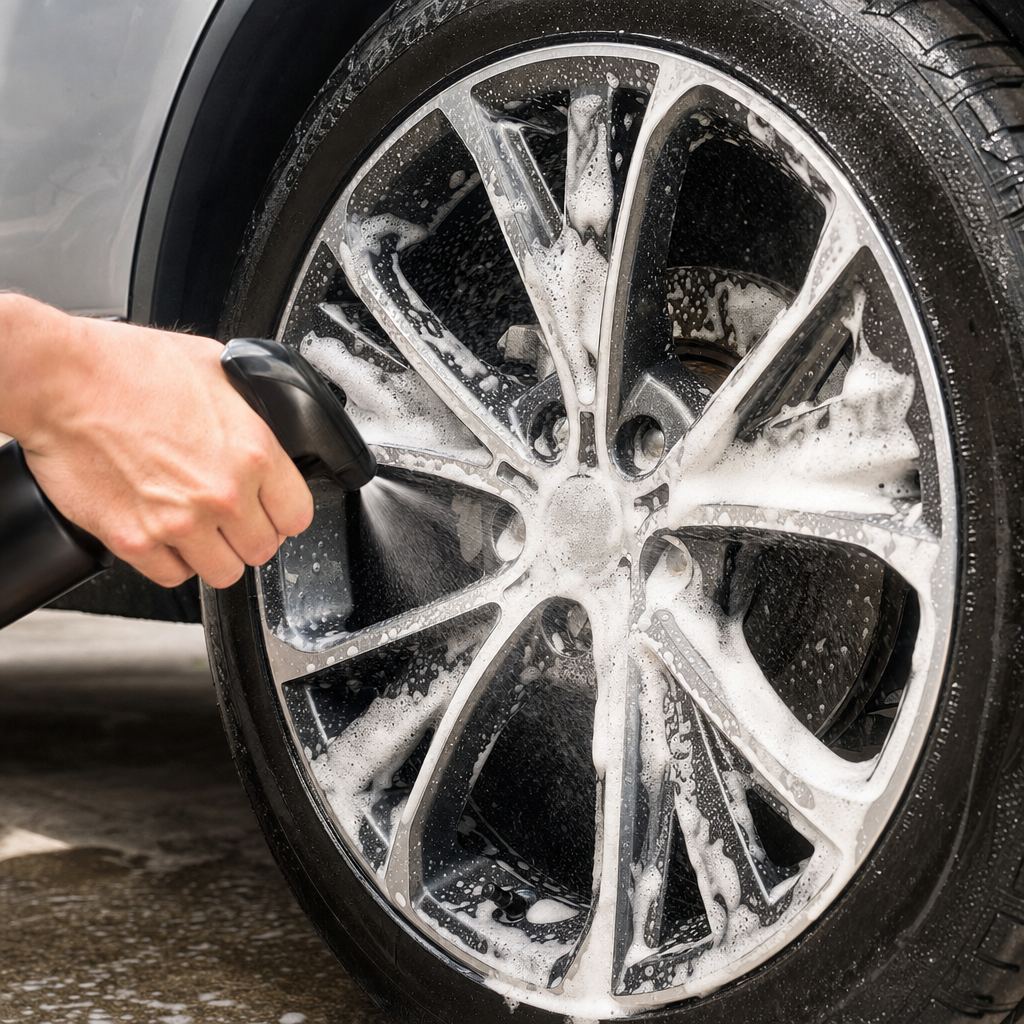
After the initial rinse, spray your chosen wheel cleaner systematically from the bottom up to prevent uneven streaking and ensure total coverage. Allow the product to dwell on the surface for the manufacturer-recommended duration, which typically ranges from one to five minutes depending on the specific formula. Do not allow the product to dry completely on the wheel surface during this dwell phase. While the cleaner is working, use specialized soft-bristled wheel brushes, detailing mitts, and barrel brushes to agitate the product into tight spoke corners, lug nut recesses, and inner barrels. Finally, rinse the entire wheel assembly thoroughly with clean water, ensuring all chemical residues and loosened grime are completely washed away before drying with a dedicated microfiber towel.
Safety Precautions and Environmental Considerations
Working with automotive chemical cleaners requires a mindful approach to personal safety and environmental stewardship. Many effective wheel cleaners contain potent active ingredients that can irritate human skin, eyes, and the respiratory system upon direct contact or inhalation. Wearing chemical-resistant nitrile gloves and eye protection during application is a smart practice, especially when handling iron-revolving sprays or traditional acid-based formulas. Always work in a well-ventilated outdoor area rather than an enclosed garage to prevent the buildup of chemical fumes. If accidental contact occurs with your skin or eyes, immediately flush the affected area with copious amounts of clean water and seek medical attention if irritation persists.
Beyond personal protection, consider the environmental impact of the runoff water generated during the wheel cleaning process. The wash water typically contains heavy metals, copper, zinc, petroleum residues, and acidic chemical compounds that can harm local aquatic life if introduced directly into storm drains. Whenever possible, wash your vehicle on a permeable surface like grass or gravel where natural soil microbes can help filter the wastewater, or utilize a commercial car wash facility equipped with professional oil-water separators and recycling systems. Being conscious of chemical runoff ensures that your routine vehicle maintenance supports a cleaner, healthier local ecosystem for everyone in your community.
Frequently Asked Questions
Can I use regular car wash soap to clean my car wheels?
Yes, standard car wash soap works well for routine maintenance on lightly soiled wheels. However, it generally lacks the specialized chemical strength needed to break down stubborn baked-on brake dust and heavy metallic fallout without significant manual scrubbing.
Why do some wheel cleaners turn purple during use?
The purple color change indicates a chemical reaction with ferrous metals. The active ingredients bind to iron particles embedded in the brake dust, chemically dissolving them and turning a deep purple to signal that the decontamination process is working.
Is it safe to use strong wheel cleaners on matte black wheels?
Not always. Matte and satin finishes are easily stained or polished smooth by harsh chemicals and aggressive scrubbing. Always choose a pH-neutral, non-acidic cleaner specifically formulated for delicate or matte wheel finishes to prevent permanent damage.
How often should I deep clean my vehicle wheels?
For most daily drivers, a thorough cleaning every two to four weeks prevents heavy contaminant buildup. If you drive aggressively or notice heavy black dust accumulating quickly, you may want to clean them during every standard weekly car wash.
Article Was Generated By AI.